
Concrete Crack Repair Using Epoxy Injection: A Complete Guide
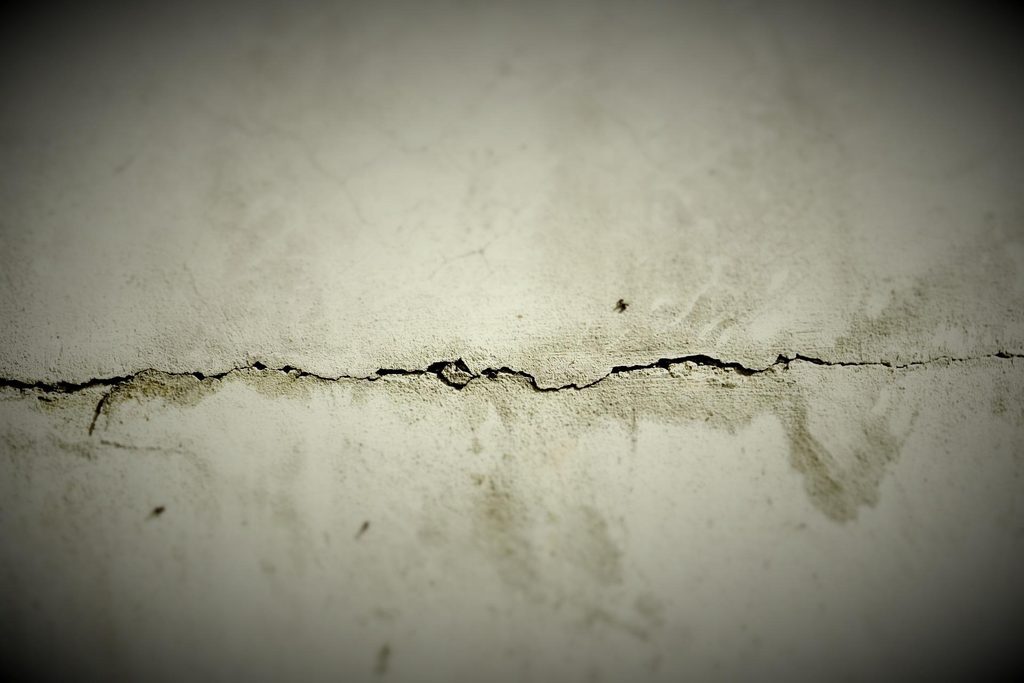
Cracked concrete is one of the most common issues facing building owners, facility managers, and infrastructure operators. Left unaddressed, even hairline cracks can let in water and chlorides, corrode embedded reinforcement, and eventually compromise the structural integrity of a slab, wall, or beam. Epoxy injection is the industry-standard method for repairing these cracks — and when done correctly, it restores the concrete to something close to its original strength.
Why Concrete Cracks in the First Place
Concrete cracks for a variety of reasons, and understanding the cause is the first step in choosing the right repair method. Shrinkage during curing, thermal expansion and contraction, structural overload, foundation settlement, corrosion of internal reinforcement, and poor construction joint placement are among the most frequent culprits. Cracks are generally grouped into two categories: non-structural cracks, which affect appearance and durability but not load-carrying capacity, and structural cracks, which indicate the member’s ability to carry load has been affected. The repair approach — and in many cases the entire engineering response — depends on which category a crack falls into.
What Is Epoxy Injection?
Epoxy injection is a repair technique in which a low-viscosity epoxy resin is injected under pressure into a crack, where it cures into a rigid, high-strength bond that effectively re-welds the concrete on either side of the crack. Because cured epoxy can exceed the tensile and compressive strength of the surrounding concrete, this method is capable of restoring structural continuity, not just sealing the surface. This is what distinguishes epoxy injection from surface sealants or routing-and-caulking methods, which stop water intrusion but do nothing to restore strength.
When Epoxy Injection Is the Right Solution
Epoxy injection is generally suitable for:
Non-moving cracks in structural concrete — slabs, walls, columns, beams, and foundations — where the goal is to restore load-transfer capacity. Cracks ranging from as narrow as 0.002 inches up to about a quarter inch, though very wide cracks may call for a different repair strategy such as routing and sealing, or a low-modulus flexible epoxy if minor future movement is expected. Dry or slightly damp cracks; actively leaking water under pressure typically needs to be addressed first, either through a different injection resin (such as polyurethane) or by temporarily managing the water before epoxy is introduced.
Cracks that are actively moving — due to ongoing settlement, seasonal thermal cycling, or unresolved structural loading — are generally not good candidates for standard rigid epoxy, since the repair can re-crack under continued movement. In these cases, the underlying cause needs to be identified and addressed, sometimes with input from a structural engineer, before a permanent repair is attempted.
The Epoxy Injection Process, Step by Step
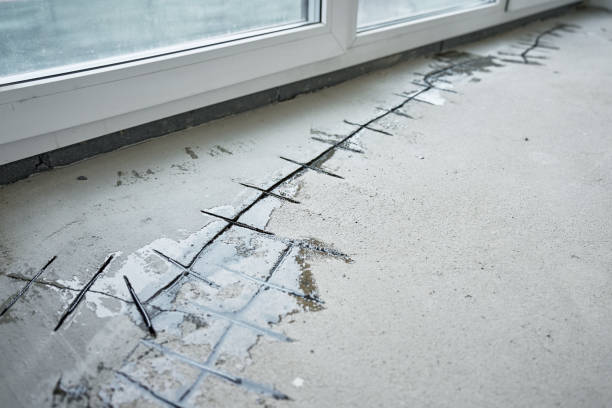
A properly executed epoxy injection repair follows a consistent sequence. First comes crack evaluation: the technician maps the crack’s length, width, depth, and behavior to confirm epoxy injection is appropriate and to plan port spacing. Next, the crack surface is cleaned of dust, oil, laitance, and loose material, since contamination is one of the leading causes of bond failure. Injection ports — small fittings that allow the epoxy to be introduced under pressure — are then set along the crack line at intervals based on the member’s thickness, typically matched roughly to that thickness so the epoxy can travel through the full depth of the section.
Between the ports, the crack is sealed at the surface with a fast-curing epoxy gel or paste, which contains the injected resin and forces it to travel into the crack rather than out through the face. Once this surface seal has cured, low-viscosity epoxy is pumped through the lowest port first, working upward as each port fills and resin appears at the next port along the line, ensuring the crack is filled continuously without air voids. After the epoxy has cured, the surface seal and ports are ground flush, leaving a clean, structurally sound surface.
Benefits of Epoxy Injection Repair
Property owners and engineers favor epoxy injection because it restores structural capacity rather than simply masking a symptom, it prevents further water and chloride intrusion that would otherwise accelerate rebar corrosion, it is far less invasive and less costly than removal-and-replacement of the affected concrete, and it can typically be completed with minimal disruption to an occupied building or an active facility. For industrial, commercial, and infrastructure clients, that combination of durability and low disruption is usually what makes epoxy injection the preferred first option once a crack has been properly diagnosed.
Getting a Professional Assessment
Not every crack needs the same fix, and choosing the wrong method can mean paying for a repair that fails within a year or two. A qualified evaluation looks at the crack’s cause, whether it is still moving, how wide and deep it runs, and what caused it in the first place, since a crack driven by an unresolved structural or drainage issue will simply return if that root cause isn’t corrected alongside the repair.
At Zenixon Construction Company, our civil and structural teams assess concrete cracking as part of our broader repair and maintenance services, recommending epoxy injection, routing and sealing, or a full structural remediation depending on what the crack actually needs — not a one-size-fits-all fix. If you’re dealing with cracked concrete in a slab, foundation, or structural member, our team can inspect the site and recommend the right repair approach for your specific conditions.